
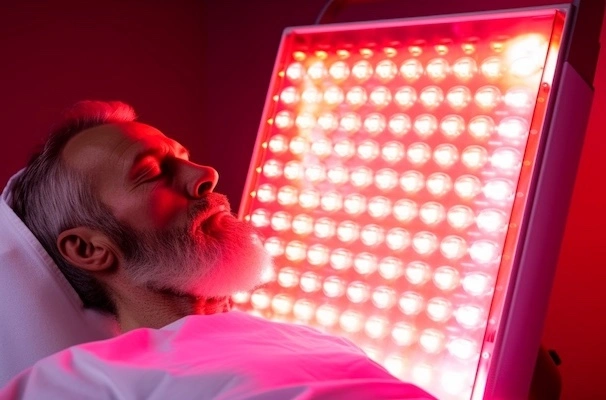
 Getting a ceramic dental implant is a significant investment in your oral health, confidence, and smile. But the procedure itself is only half the story. Once Dr. Sammy Noumbissi places the ceramic dental implant, the healing process begins. To enhance the recovery process, Dr. Sammy Noumbissi incorporates red light therapy (RLT) to improve healing outcomes.
What Are Ceramic Dental Implants?
Ceramic dental implants, made from zirconia, are metal-free alternatives to traditional titanium implants. They are a biocompatible and holistic tooth replacement option that integrates naturally with the surrounding bone and tissue. Dr. Sammy Noumbissi, a world-renowned ceramic implant surgeon at Miles of Smiles Implant Dentistry, has placed over 5,000 successful metal-free dental implants. His practice is built around biocompatible materials and cutting-edge technology—and red light therapy is one of the tools he uses to support optimal healing outcomes.What Is Red Light Therapy?
Red light therapy uses a low-level laser or LED light to penetrate soft tissue and stimulate natural healing at a cellular level. It is non-invasive, painless, and has been studied extensively for its regenerative effects in both medical and dental settings.Benefits of Red Light Therapy On Ceramic Implant Healing
Reduces Inflammation and Pain
After ceramic dental implant surgery, some swelling and discomfort are expected. RLT helps modulate the body’s inflammatory response—reducing pro-inflammatory markers without suppressing the healing process. For patients, this often translates to a more comfortable post-op recovery with less reliance on pain medication.
Enhances Cellular Regeneration
Red light therapy enhances tissue repair and osseointegration; therefore, the dental implant fuses to the jawbone at a faster rate. Strong osseointegration is critical for long-term implant stability.
Improves Blood Circulation
Healthy blood flow delivers oxygen and nutrients to the surgical site, which are both important for the healing process. Red light therapy promotes the formation of new capillaries and improves microcirculation in the treated area, creating better conditions for the surrounding bone and gum tissue to recover.